
The Digital Ecosystem Every Healthcare Practice Needs in 2026

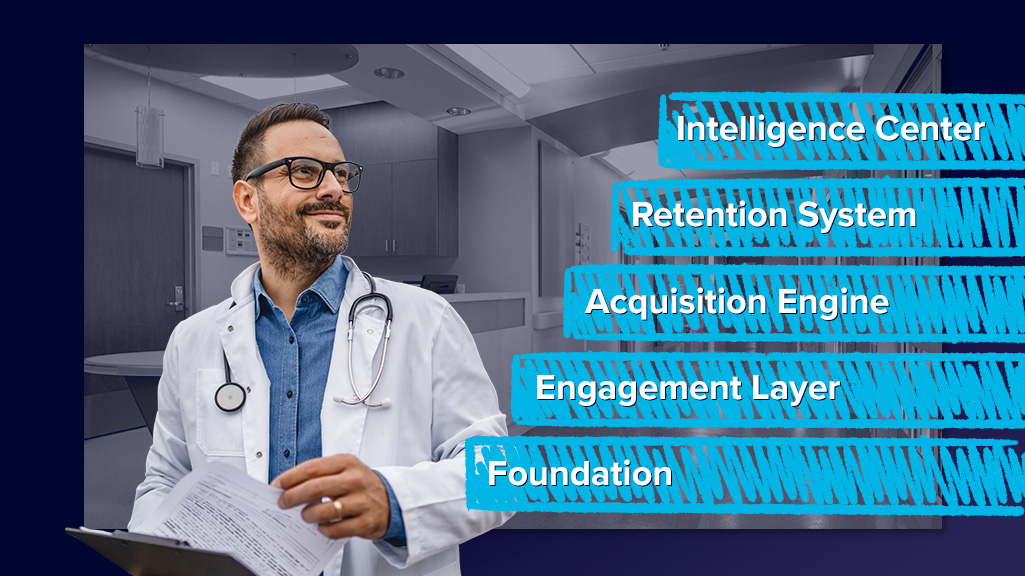 Healthcare practices typically don’t have a technology shortage. Integration is usually the biggest hurdle they face. Most operate with a collection of disconnected digital tools: a website that doesn’t talk to the scheduling system, social media that isn’t tied to any measurable outcome, and analytics nobody is regularly checking in on. Each tool works in isolation, but patients expect a seamless experience across every touchpoint.
The practices growing consistently in 2026 treat their digital presence as an interconnected ecosystem rather than a checklist of individual platforms. When the website feeds into the scheduling system, content supports search visibility, advertising drives qualified traffic, and communication tools maintain relationships, the entire system contributes to growth. Each component strengthens the others.
Building this ecosystem doesn’t require massive technology budgets, but it does require intentional design and the understanding of how each piece connects to the next.
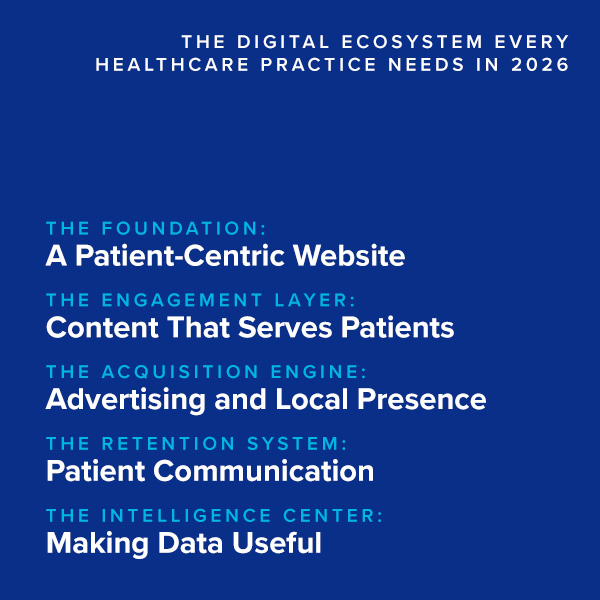
The Foundation: A Patient-Centric Website
Healthcare websites in 2026 serve a fundamentally different purpose than they did even three years ago. They’re no longer digital brochures listing credentials and office hours. They function as the central hub of patient acquisition, education, and ultimately conversion.
Mobile performance is non-negotiable. Over 60% of healthcare searches happen on smartphones. Patients research symptoms late at night, search for urgent care from parking lots, and look up office addresses while driving. A site that loads slowly or displays poorly on mobile can turn away patients before they ever read a single word.
Functionality expectations have shifted significantly. Online scheduling with real-time availability, digital intake forms, and patient portal access represent baseline requirements rather than features previously considered “nice to haves.” Patients accustomed to booking restaurants, flights, and rideshares from their phones expect the same convenience from their healthcare providers.
Accessibility compliance also requires attention. In May 2026, HHS OCR announced updated deadlines for web accessibility requirements under Section 504, with organizations of 15 or more employees now required to meet WCAG 2.1 Level AA standards by May 2027. Practices receiving federal funding through Medicare or Medicaid fall under these requirements.
Local healthcare SEO has evolved alongside AI search changes. AI Overviews now trigger on 89% of healthcare-related search queries. This means practices need content structured to answer specific patient questions rather than simply targeting keyword phrases. Clear, authoritative content with proper schema markup positions practices for visibility in both traditional and AI-generated search results.
The Engagement Layer: Content That Serves Patients
Content strategy in 2026 centers on education and authority rather than promotional messaging. Leading healthcare organizations are shifting from promotional content to authoritative content creation, with digital marketing now centering on education and value delivery.
Effective healthcare content marketing addresses the questions patients actually ask. Service pages explaining conditions treated and procedures offered in plain language serve both patient education and search optimization. Blog content answering common patient concerns generates organic traffic while establishing expertise through supportive content pages.
Video content continues growing in importance, but format matters. Short-form video explaining conditions, demonstrating exercises, or introducing providers performs well on social platforms and embeds naturally into service pages. Longer educational content serves YouTube’s search function, where patients increasingly research health topics. Long form videos are also great as website content pieces and result in longer time on page engagement.
The key to sustainable content production for small practices is repurposing. A single provider interview can become a blog post, social media clips, podcast audio, and website content. Building content workflows that maximize output from limited production time keeps healthcare content marketing manageable without dedicated marketing teams. It also helps maximize the value of the more costly production needs for these content types.
The Acquisition Engine: Advertising and Local Presence
Google Business Profile optimization remains the highest-return investment for local patient acquisition. Complete profiles with current photos, accurate hours, detailed service descriptions, and consistent review generation outperform paid advertising for many practice types.
Patients move across multiple channels before making a decision. They might see a practice on social media, check reviews, visit the website, and only then book. This multi-touchpoint reality means attribution modeling matters. Understanding which channels contribute to patient acquisition, even when they aren’t the final conversion point, prevents practices from cutting effective channels based on incomplete data.
Paid search and social advertising work best when built on strong organic foundations. Practices with well-optimized websites, compelling content, and strong review profiles convert paid traffic at higher rates because patients who click an ad and find a credible, well-designed website follow through on appointments.
The Retention System: Patient Communication
Patient acquisition costs continue rising, making retention and reactivation increasingly valuable. HIPAA-compliant communication platforms that automate appointment reminders, follow-up messages, and re-engagement campaigns maintain relationships without adding staff workload.
Automated patient journey communications serve multiple purposes. Pre-appointment messages reduce no-shows and prepare patients for visits. Post-visit follow-ups demonstrate care continuity while creating natural opportunities for review requests. Periodic health reminders reactivate dormant patients who haven’t scheduled routine care.
Referral programs amplified through digital tools turn satisfied patients into acquisition channels. Simple text-based referral systems where patients can share practice information with friends and family generate high-quality leads at minimal cost.
The Intelligence Center: Making Data Useful
Analytics without action is just reporting. Practices need dashboards that connect marketing activity to patient acquisition in clear, actionable terms. How many new patients came from organic search this month? Which service pages generate the most appointment requests? What’s the actual cost per new patient from paid advertising?
Privacy-compliant tracking in 2026 requires careful configuration. Website analytics and similar tools need specific setup for healthcare to avoid inadvertently collecting protected health information through URL parameters or form tracking. Our Healthcare Website Compliance Guide touches on the HIPAA and consumer privacy requirements now in place and how to button up compliance gaps.
The practices making the best decisions connect marketing data with practice management system data. Knowing that a Google Ads campaign generated 50 clicks is less valuable than knowing it generated 12 new patient appointments with an average lifetime value that justifies the spend.
 Making the Ecosystem Work Together
 Making the Ecosystem Work Together
The practice management system serves as the operational hub connecting these components. Patient data flows from the website to scheduling, from scheduling to communication tools, and from communication tools back to marketing analytics.
Technology selection should prioritize integration capability over individual feature lists. A slightly less sophisticated scheduling tool that connects seamlessly with the website, EHR, and communication platform delivers more value than a feature-rich system operating in isolation.
Staff training determines whether technology investments pay off. The most sophisticated digital ecosystem fails when front desk staff can’t navigate the scheduling system or providers don’t understand how patient communication tools work. Implementation plans should allocate as much time to training as to technology setup.
Building Your Practice Ecosystem
Audit current digital tools and identify where connections break down. Map the patient journey from initial search to appointment completion, noting every point where information transfers manually or systems don’t communicate. These gaps represent the highest-impact improvement opportunities.
Prioritize integration over addition. Before investing in new tools, ensure existing ones work together effectively. A well-connected three-tool ecosystem outperforms six disconnected platforms every time.
The digital ecosystem approach builds sustainable growth rather than campaign-dependent spikes. When each component supports the others, patient acquisition becomes a system rather than a series of isolated efforts.
Get Your Tailored Patient Pipeline Blueprint
A 2-Hour Healthcare Marketing Consultation to Attract, Convert, and Retain More Patients Guaranteed!
Imagine a practice where new patients book appointments every week and your current patients keep coming back. The Patient Pipeline Blueprint turns that vision into reality.